[Case Study]
Carbon Cell
Elizabeth Lee, CEO
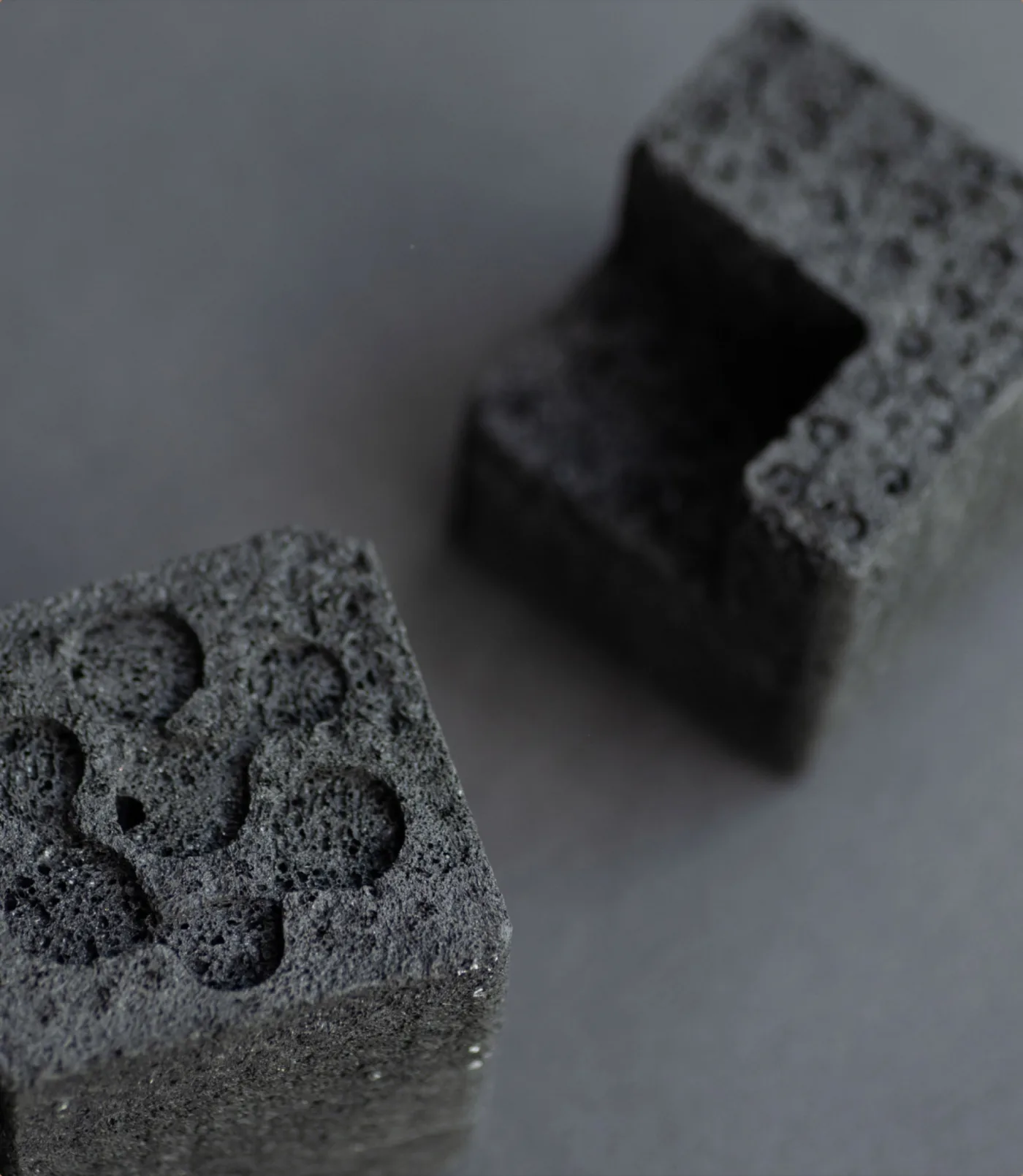
Carbon Cell is dedicated to providing a sustainable alternative to traditional polymer-based foams, with a patent-pending, plastic-free material made from carbon-negative biochar and natural binders. This unique material fills a gap in the $115 billion market for expanded foams created by increased legislation against single-use plastics, growing carbon tax pressure and changing consumer preferences, helping businesses in packaging, the built environment, modelling/fabrication, marine foams and beyond meet their sustainability targets.
The company and the innovative material that shares its name began as a research project while the company’s founders were studying Innovation Design Engineering at Imperial College London and the Royal College of Art. The team of designers and engineers became fascinated with harnessing the properties of biochar, a type of porous carbon material that the World Economic Forum estimates could fulfil up to 35% of the world’s carbon dioxide removal needs.
Biochar derives from biomass – normally agricultural wastes. Plants, which have accrued carbon during their lifespans through photosynthesis, are harvested for their valuable components, and remaining matter usually gets either burned (re-emitting carbon in the form of CO2), or left to degrade (re-emitting carbon in the form of methane). However, when this material is collected and converted into biochar, the carbon contained inside is ‘fixed’ through the process of pyrolysis. This means biochar is effectively carbon negative.
The team became fascinated with not only the carbon footprint of the material, but also its technical properties – extremely lightweight, porous, a good insulator – and where they could solve existing industrial problems.
Foam materials are widely used across architecture (insulation, acoustics), automotive (composites), creative industries (film, theatre, design), packaging and a host of other hidden applications. Conventional foams require oil resources to make, and can be difficult or not cost-effective to recycle; additionally they often escape into the environment where they can leech microplastics, due to the fact that they are lightweight and float/drift on wind and currents.
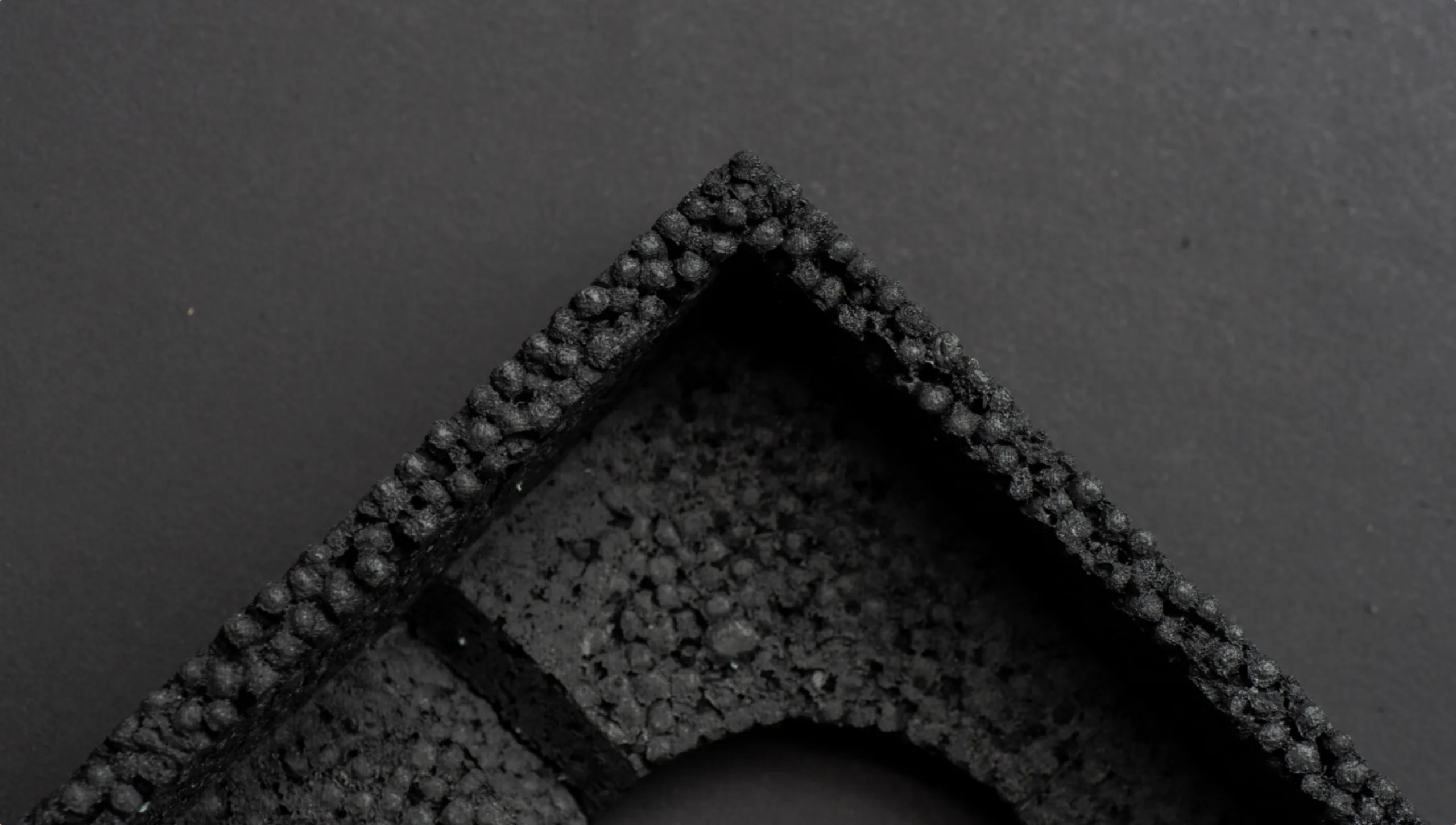
The Carbon Cell team thought biochar’s properties – lightweight, porous, insulating – were ideal to incorporate into a bio-based foam material. The company’s core technology allows biochar to be compounded with a natural polymer into pellets or beads, which can be expanded into foam using heat, in a manner similar to conventional foams such as EPS (expanded polystyrene). The material can be moulded and machined into various shapes and formats to suit different industrial applications.
The vision for circularity of this material exists on several levels: 1) the material can technically be recycled if appropriate collections exist – although this remains a huge challenge for most materials. 2) the material can be composted and will degrade in natural environments, during which process the natural polymers it contains will break down, but the biochar will remain a carbon sink, and has been shown to improve soil health. As a bio-derived resource intended to return in the ‘natural’ recycling system perfected by microbes over millennia, this vision of circularity is broader than the tight technical loops of re-use and recycling that often come to mind.