[Case Study]
Low Carbon Industrial
Conor Taylor, Co-founder
Low Carbon Industrial (LCI) is an innovative materials company building on the pioneering work of timber terrazzo brand Foresso. Its mission? To reduce the carbon footprint of architectural materials without compromising performance, aesthetics or practicality. By creating thoughtful low-carbon alternatives, LCI supports both design excellence and environmental responsibility.
The idea of repurposing existing infrastructure is at the core of LCI as it looks at the realities of day-to-day manufacturing, and how to collaborate and create circular economies where they didn’t exist already. Keen to demonstrate commercial viability to the wider industry, LCI uses material design to improve, decarbonise and revolutionise the built environment. Meaning it starts with the idea of piggybacking on large-scale manufacturing techniques rather than trying to reinvent them.
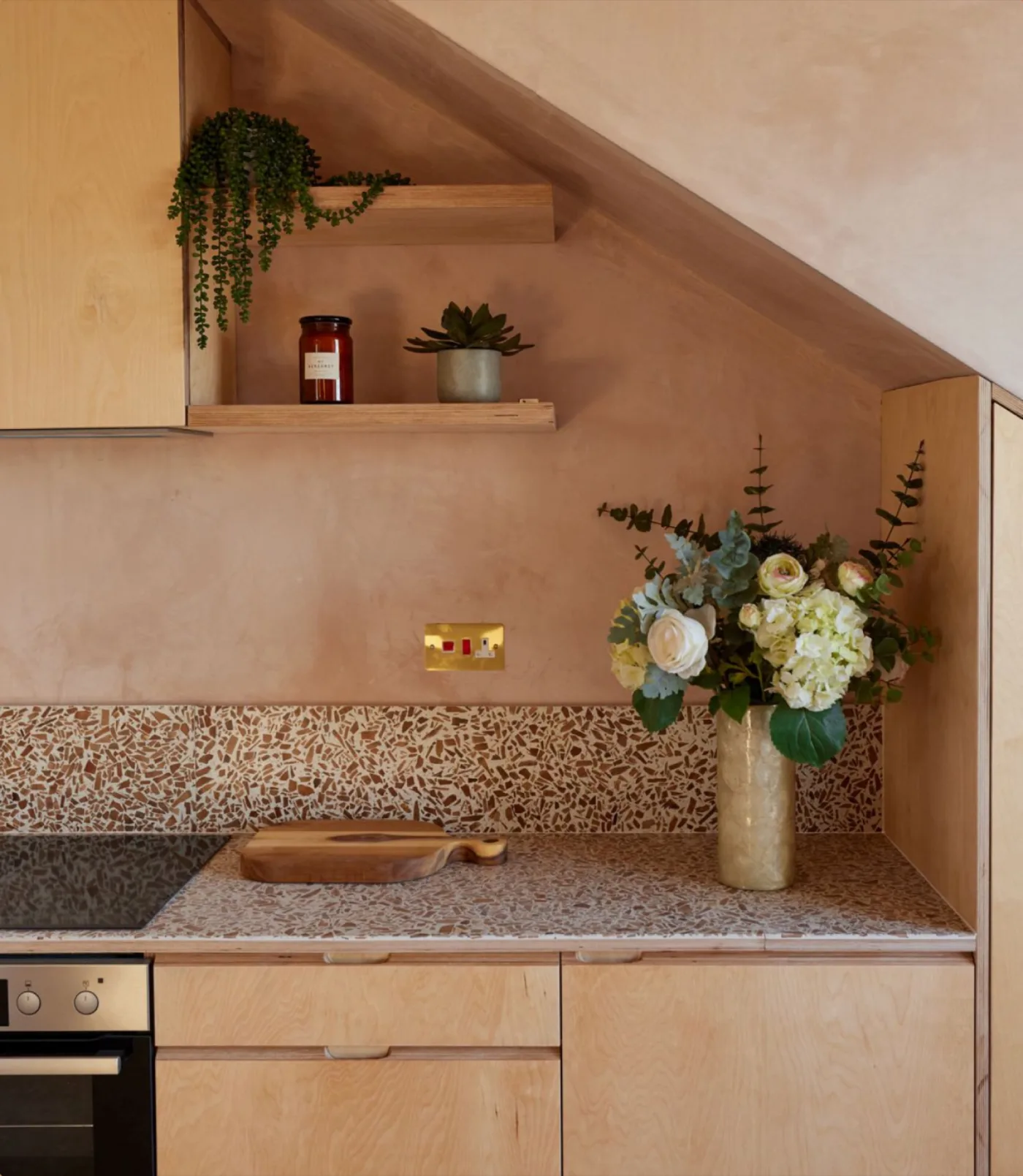
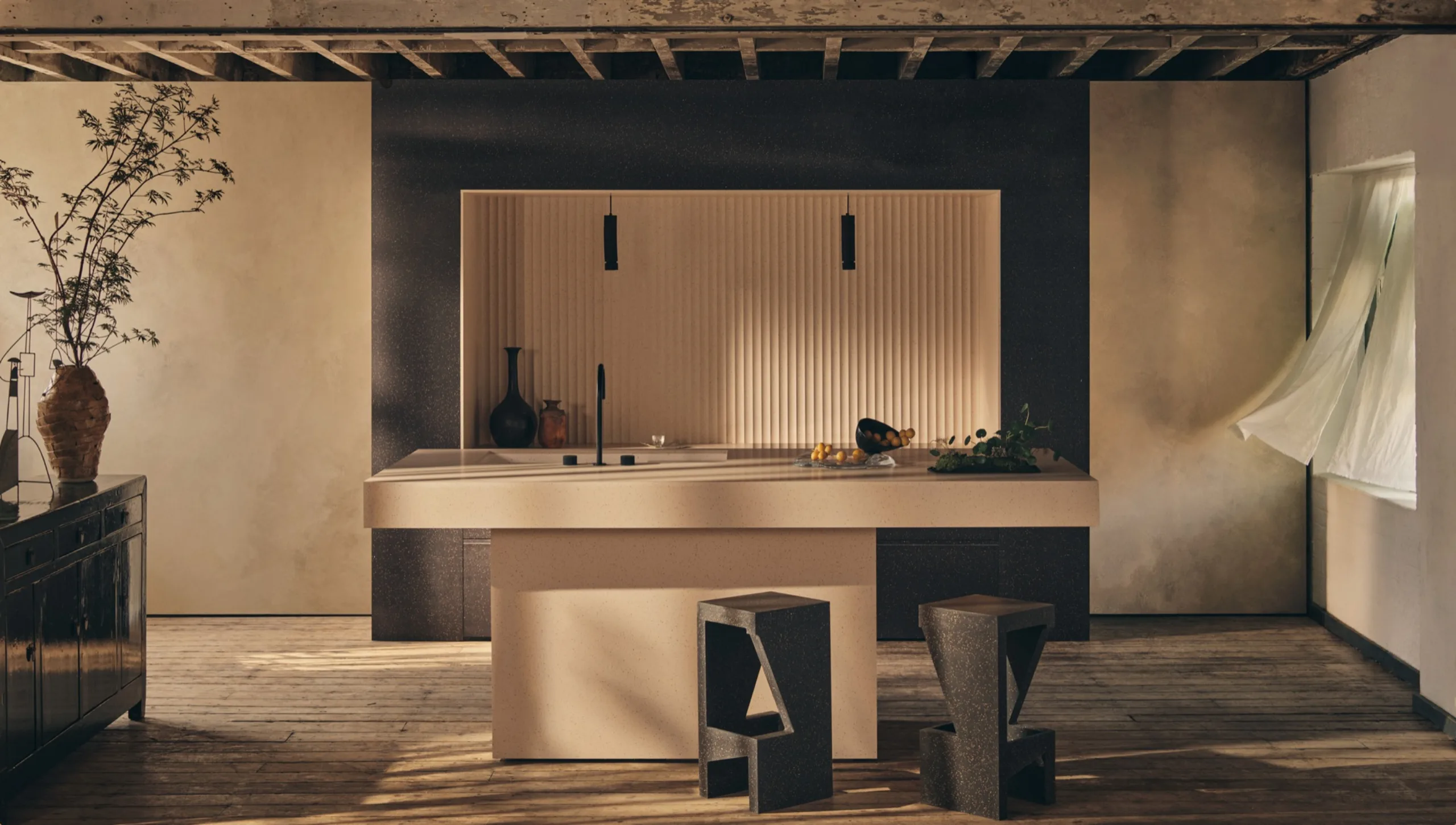
Elenite is LCI’s debut product. Designed for architects, designers and fabricators, it brings richness and character to solid surfaces, with versatile applications across kitchens, bathrooms and furniture. Made from natural waste materials such as walnut shell, walnut dust and bamboo fibre, it combines tactile warmth with natural pigments. The surface comes in four distinctive colours, allowing designers to integrate sustainability seamlessly into diverse palettes.
Drawing on the experience of launching Foresso, LCI has learned just how much the design community values tactility, storytelling and sustainability when executed well. If innovation isn’t visually appealing, people will have a reason not to adopt change.
Engineered for high-specification environments, Elenite delivers performance comparable with leading competitors while reducing embedded carbon by 29%, with future production targeting a 50% reduction. Made in partnership with Taiwan-based specialist Meganite, which shares LCI’s commitment to doing things differently, it is chosen by those who do, too.
Elenite contains no silica, formaldehyde or water. Its circular production process recycles all manufacturing waste, and end-of-life sheets can be returned for complete recycling into future batches. In each Elenite sheet (3,660 x 760 x 12mm) there is 35% recycled resin, which equates to 1,900 water bottles (600ml) being recycled and reused per sheet.
Together with Meganite, LCI is proving that beauty, performance and environmental intelligence can come as standard.